Assets in three countries: a cross-border inheritance playbook
A flat abroad, an account at home, a pension somewhere else. Cross-border estates take longer and cost more — unless you prepare. A seven-step playbook for internationally mobile families.

To prepare a cross-border estate: identify which law governs your succession, list every asset with its country and institution, check each country’s formal requirements for wills and transfers, align beneficiary designations, anticipate tax in every country involved, choose professionals who can coordinate, and give your heirs one secure place where all of this is documented. The biggest risk is not complexity itself but assets nobody knows about.
- Start with the governing law — everything else depends on it.
- Tag every asset with its country: procedures, taxes and languages follow the asset.
- Some countries may require local documents or procedures even when another law governs the succession.
- Your heirs need one map in one language — not three filing cabinets.
Mobile families are now the norm: people study in one country, work in a second, retire in a third and keep a bank account in each. Their estates are international by default — and settling them can involve several notaries or courts, translations, apostilles and tax returns in more than one country.
The seven-step playbook
- Identify the governing lawIn the EU, usually your habitual residence unless you choose your nationality (Living abroad? How the EU Succession Regulation decides which law applies to your estate). Outside the EU, countries apply their own conflict rules — sometimes by nationality, sometimes by domicile, sometimes by where real estate is located.
- Tag every asset with a countryBank accounts, securities, real estate, pensions, company shares, crypto exchanges (note where the platform is regulated). Each tag tells your heirs which procedure to expect.
- Check local formalitiesA will valid in one country may need extra steps elsewhere; land registries often require local documents. Some advisers recommend separate wills per country — if so, make sure they don't revoke each other by accident.
- Align beneficiary designationsLife insurance and pensions often pass by designation, outside the will. Check every designation is current and consistent (Life insurance: the beneficiary clause is the real will).
- Anticipate tax in every countryInheritance tax can be due where the deceased lived, where the heir lives, or where the asset is. Check whether tax treaties exist between the countries involved (Inheritance tax around the world: a beginner’s map).
- Choose a coordinatorA lead notary or lawyer who can work with counterparts abroad saves months. Record their details where your heirs will find them.
- Write one map in one languageYour heirs may not speak the language of each institution. Write a short description of each asset in a language they understand, with the institution's contact details.
A simple cross-border asset register
| Asset | Country | Institution | Documents | Note for heirs |
|---|---|---|---|---|
| Apartment | Portugal | Land registry ref. | Deed, tax ID | Local notary needed for transfer |
| Current account | Belgium | Bank, branch | Last statement | Joint with spouse |
| Pension | Germany | Pension fund | Membership number | Survivor benefit possible |
| Brokerage | Luxembourg | Broker | Account opening letter | Statements in English |
| Crypto | — | Hardware wallet | Instruction letter | See secure access |
Record values in the currency of each asset and note the date. Heirs and advisers will convert later; what they need is a faithful snapshot.
One encrypted map, many countries
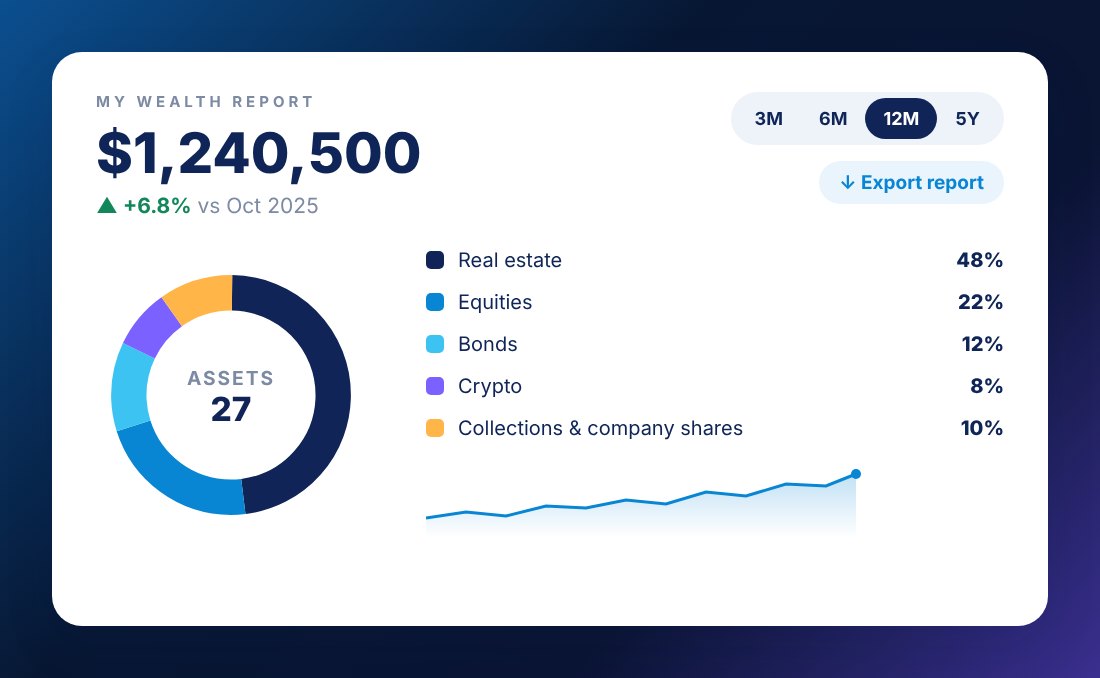
In OSTREON, each asset carries its own country, institution, value history, documents and custom fields — edited like a spreadsheet. The wealth report gives you exposure by category over the period you choose. Hosting is split between separate EU and US instances, each following local privacy law. And when the time comes, each beneficiary receives the part of the map that concerns them.
Start your free month →Frequently asked questions
How do I plan an estate with assets in several countries?
Determine the governing law, list each asset with its country and institution, check local formalities, align beneficiary designations, anticipate tax in each country, appoint a coordinating professional, and keep one secure, up-to-date record for your heirs.
Do I need a separate will in each country?
Sometimes it is recommended, especially for real estate, but it must be done carefully so that one will does not accidentally revoke another. Ask a professional familiar with the countries involved.
Where is inheritance tax due for foreign assets?
Depending on the countries, tax may be due where the deceased lived, where the heir lives and/or where the asset is located. Tax treaties may limit double taxation.
How can my heirs find my foreign bank accounts?
Only if they know they exist. Record each foreign account with its institution, country and documents in a secure place they will receive, such as OSTREON.
This article is general information, not legal, tax or financial advice. Rules differ by country and change over time — check with a qualified notary, lawyer or adviser for your situation.