
Leaving assets to a minor: guardians, management and the mistakes to avoid
Children can inherit — but they can’t manage what they inherit. Who looks after the money, who looks after the child, and how to make sure the right adult is contacted, never the child.

A minor can inherit assets but cannot manage them; until adulthood, they are handled by a legal representative — usually the surviving parent, or a guardian appointed by will or by a court — sometimes under court supervision. Parents can name a guardian, separate the role of caring for the child from managing the money, use structures such as trusts where available, and make sure any sensitive information reaches the guardian rather than the child.
- Name a guardian in your will — and a backup — where your law allows.
- Caring for a child and managing their money can be two different people.
- Large sums paid at majority can be a burden; many systems allow staged access through trusts or similar tools.
- Never let sensitive information reach a minor directly: route it to their guardian.
Parents of young children often postpone estate planning because it feels premature. Yet they are precisely the people for whom it matters most. If both parents die, someone must care for the children and someone must manage what they inherit — and a court may have to decide both if you haven't.
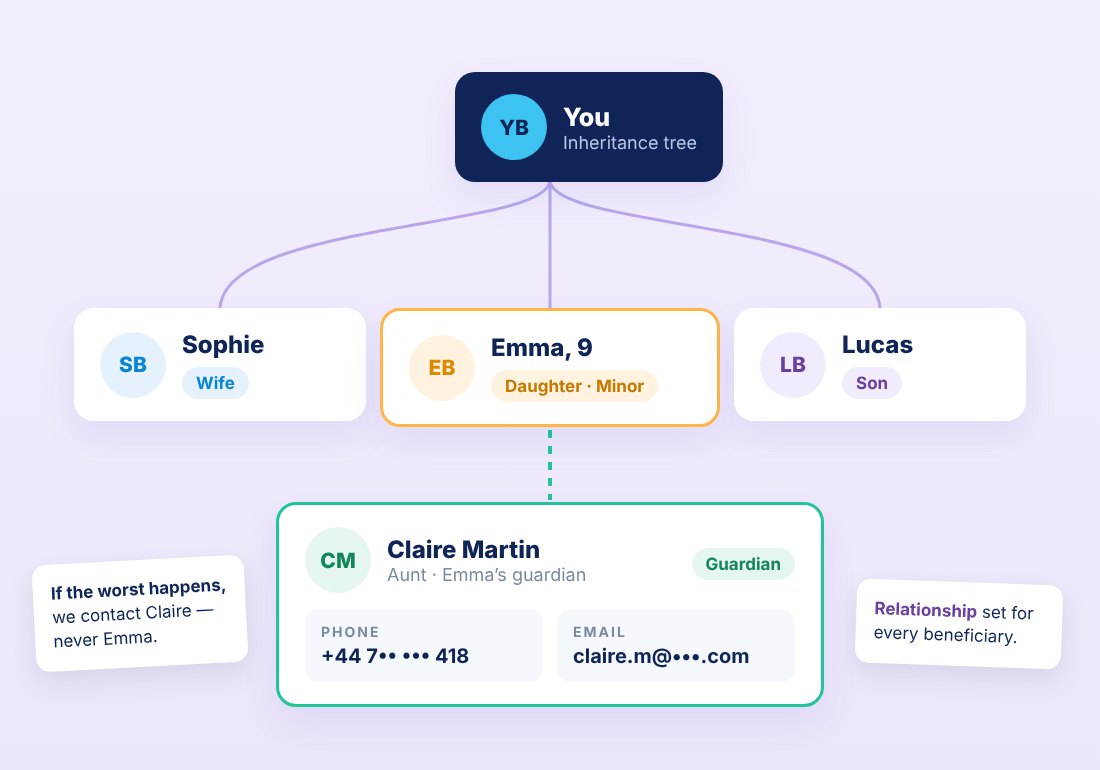
Two roles, not one
Separating the two roles can reduce pressure and conflicts of interest. Ask your notary or lawyer what your local law allows: appointments by will, court supervision, or trust-like structures.
The five classic mistakes
- No guardian namedA court decides, without knowing your wishes or your family dynamics.
- No backupThe named guardian becomes unable or unwilling.
- Everything at 18A large sum received at majority can overwhelm a young adult. Consider staged access where possible.
- Beneficiary clauses naming the child directlyLife insurance paid to a minor may trigger court procedures. Check how your policies are worded (Life insurance: the beneficiary clause is the real will).
- Information sent to the childPasswords, documents, financial details reaching a nine-year-old's inbox — or not reaching anyone.
A note for the guardian
Write one page for the person you choose: the children's routines, health information, schools, the people who matter in their lives, and what you hope for them. It is not legally binding — and that is exactly why it is precious.
We contact the guardian. Never the child.
In OSTREON's inheritance tree, you mark each beneficiary's relationship to you, flag minors and assign them a guardian. When the inheritance is triggered, we never contact a minor directly: their guardian receives the information and access you prepared, for the assets assigned to the child.
Start your free month →How to choose the right person: How to choose a guardian for your children: a decision guide. If you are the guardian: Named as a guardian: a handbook for managing a child’s inheritance. Blended families: Blended families: planning so nobody is surprised.
Frequently asked questions
Can a child inherit money?
Yes, but a minor cannot manage it. Until adulthood, a legal representative — often the surviving parent or a guardian — manages the assets, sometimes under court supervision.
How do I choose a guardian for my children?
Where your law allows, name a guardian and a backup in your will, after discussing it with them. Consider separating the person who raises the children from the person who manages their money.
What happens if both parents die without naming a guardian?
A court or family council, depending on the country, appoints a guardian — without necessarily knowing your wishes.
How does OSTREON handle minor beneficiaries?
You flag minors and assign a guardian in your inheritance tree. OSTREON never contacts a minor directly; the guardian receives the information for the assets assigned to the child.
This article is general information, not legal, tax or financial advice. Rules differ by country and change over time — check with a qualified notary, lawyer or adviser for your situation.