
How to pass on crypto without ever revealing your seed phrase
Crypto inheritance has a paradox: the only way to pass on self-custodied coins is a secret you must never share. Here are the four strategies that resolve it — and their trade-offs.
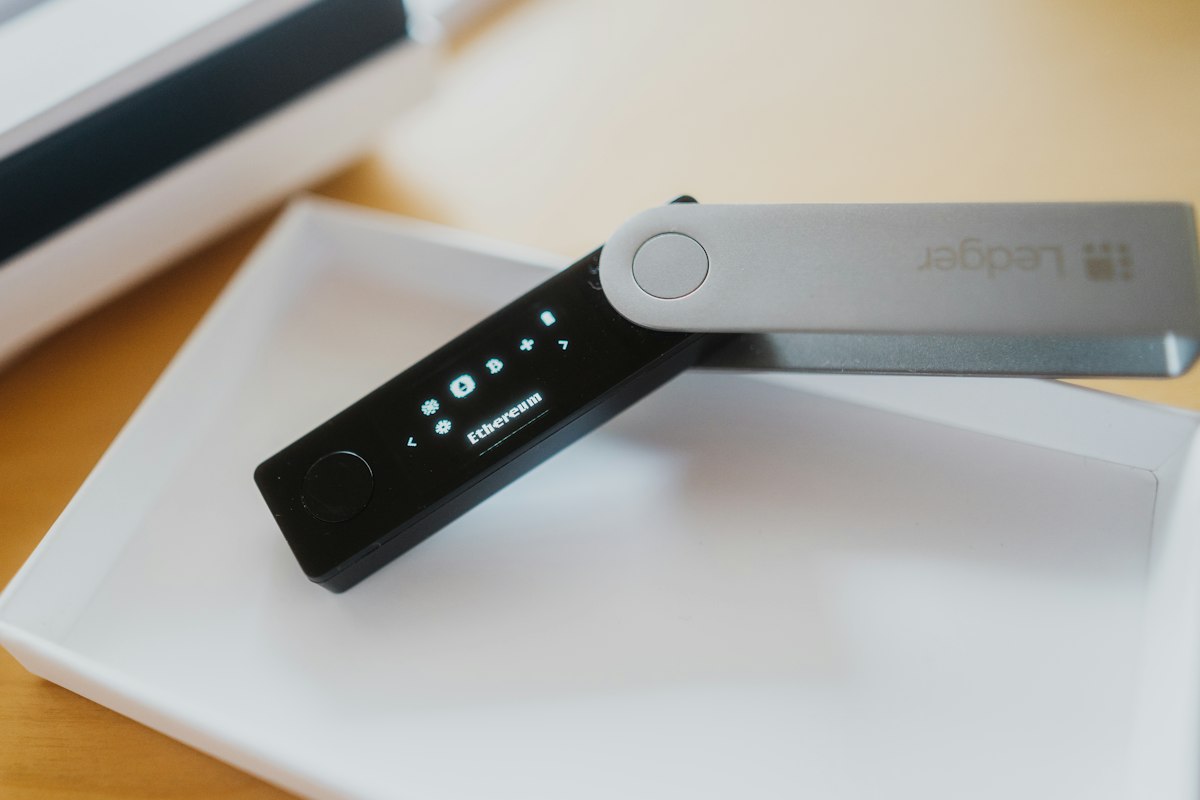
To pass on self-custodied crypto safely, your heirs need three things — to know the assets exist, to find the wallet, and to obtain the secret that controls it — but only at the right moment. The main approaches are a sealed secret released by a trusted system, multisignature wallets, secret-sharing schemes such as Shamir backups, and exchange-held accounts with a documented claim process. Whatever you choose, never hand the recovery phrase to anyone in advance, not even a notary.
- Whoever holds your recovery phrase holds your coins — today, not only after your death.
- Heirs need existence, location and access; most failures come from the first two, not the third.
- Naively splitting the 24 words in two halves weakens security; use real secret-sharing or multisig instead.
- Pair the technical setup with a plain-language instruction letter written for a non-expert.
With most assets, inheritance is a paperwork problem. With self-custodied crypto it is a cryptography problem. A bank will transfer an account to heirs once they prove their rights. A blockchain does not care who has the legal right: it obeys whoever has the private key. That is why so many coins are believed to be lost forever — and why the usual advice (“write it down and give it to someone you trust”) is dangerous.
The paradox in one sentence
Your heirs need your secret after you're gone, but anyone who has it before is already the owner.
Every good crypto inheritance plan is a way of separating knowing from controlling until a trigger event happens.
What heirs actually need
 1. ExistenceThat you own crypto at all, which networks and roughly how much.
 2. LocationWhich exchange, which hardware wallet, where the device and backup are kept.
 3. AccessThe recovery phrase, any passphrase (“25th word”), PINs — or the claim process for an exchange.
Families most often fail at steps 1 and 2. A hardware wallet in a drawer looks like a USB stick. An exchange account with no email notifications leaves no trace.
Four strategies, compared
| Strategy | How it works | Strengths | Watch-outs |
|---|---|---|---|
| Sealed secret + trusted release | The phrase is stored encrypted and released to a named person only after a trigger (inactivity, death) | Simple for heirs; you keep sole control while alive | The release system must be genuinely zero-knowledge and resistant to early access |
| Multisignature wallet | E.g. 2-of-3 keys: you hold two, an heir or service holds one | No single point of failure; no full secret ever shared | More complex; heirs must understand how to co-sign |
| Secret sharing (e.g. Shamir backup) | The secret is mathematically split into shares; a threshold (say 2 of 3) rebuilds it | One lost or stolen share reveals nothing | Requires compatible wallets; shares must be stored well apart |
| Custodial exchange | Coins sit on a regulated platform that handles estate claims | Familiar process with documents | Counterparty risk; heirs must know the account exists |
Giving 12 words to one person and 12 to another feels clever, but each half drastically reduces the work an attacker needs to guess the rest. If you want splits, use a scheme designed for it (Shamir-based backups or multisig).
The part everyone forgets: the instruction letter
Your heir may never have used a hardware wallet. Write one page, in plain language: what the device is, which app to install, that they should never type the phrase into a website, and whom to call for help. Add a warning about scams — fake “recovery services” target grieving families (see Inheritance scams in the age of AI: deepfakes, fake notaries and phishing heirs).
Separate “knowing” from “controlling” — automatically
OSTREON lets you record each wallet as an asset — network, device location, instructions and the recovery phrase itself — encrypted on your device with a key derived from your password. Our team cannot read it, and neither can anyone else.
- Assign the wallet to one or several beneficiaries, with priority levels.
- Confirm you're fine every 7 to 90 days; daily reminders follow if you miss one.
- Only if you stay inactive does the assigned beneficiary unlock it — through an activation link, a 32-character key, a one-time code and a personal detail only they know.
As our FAQ puts it: never share a recovery phrase, not even with a notary.
Start your free month →For a full case study of what goes wrong without a plan, read The bitcoin that vanished: a (fictional) inheritance story. And because many wallets are protected by an authenticator app, check Two-factor authentication can lock your heirs out. Plan for it..
Frequently asked questions
Can my heirs recover my crypto without the seed phrase?
For self-custodied wallets, generally no: without the recovery phrase (and any passphrase), the funds cannot be moved. For coins held on an exchange, heirs can usually file an estate claim with documents, provided they know the account exists.
Should I give my seed phrase to my notary or lawyer?
No. Whoever holds the phrase controls the coins immediately. Professionals can document your intentions, but the secret itself should be stored encrypted and released only when a trigger event occurs.
Is multisig better than a single seed phrase for inheritance?
Multisig removes the single point of failure and avoids ever sharing a full secret, but it is more complex for non-technical heirs. Many people combine a simpler setup with a clear instruction letter.
How does OSTREON protect a crypto recovery phrase?
It is encrypted on your device with AES-256 before upload, using a key derived from your password. It is released only to the beneficiary you assigned, only after you stop confirming you are fine, and only through several authentication layers.
This article is general information, not legal, tax or financial advice. Rules differ by country and change over time — check with a qualified notary, lawyer or adviser for your situation.