
Build your personal balance sheet in one afternoon
Companies know their net worth to the cent; most families don’t. A step-by-step method to build a personal balance sheet — assets, debts, net worth, exposure — that you can keep current in minutes.

A personal balance sheet lists everything you own (assets) and everything you owe (liabilities) at a given date; the difference is your net worth. To build one, group assets into categories (cash, investments, real estate, retirement, business, crypto, collectibles), attach debts to the assets they finance, record values with a date and source, and review exposure by category. Updated a few times a year, it becomes the backbone of both wealth decisions and estate planning.
- Net worth = what you own − what you owe, at a date.
- Attach each debt to the asset it finances to see true equity.
- Record the source and date of every value; precision matters less than consistency.
- The same document serves today’s decisions and tomorrow’s inheritance.
Ask a CFO about their company's net worth and you'll get a number by the end of the day. Ask the same CFO about their household and many will shrug. A personal balance sheet brings company-grade clarity to family wealth — and it is far simpler than it sounds.
Step by step
- List assets by categoryCash and savings; investments; retirement accounts; real estate; business interests; crypto; collectibles and valuables; receivables (money owed to you).
- List liabilitiesMortgages, loans, credit lines, tax due, guarantees given for others.
- Link debts to assetsThe flat is worth 400,000 with 150,000 left on the mortgage: equity of 250,000. Linking shows what you really own.
- Value with a date and a sourceBank statement, broker valuation, estimate from comparable sales, insurance valuation. Note the date.
- Calculate net worth and exposureTotal assets minus total liabilities — then look at the split by category and by country.
- Set a rhythmQuarterly for active investors, twice a year for most families. Track the trend, not the noise.
A minimal template
| Category | Asset | Value | Linked debt | Net | Source & date |
|---|---|---|---|---|---|
| Real estate | Main home | 640,000 | 210,000 | 430,000 | Estimate, Q3 |
| Investments | Equity portfolio | 145,300 | — | 145,300 | Broker, 30 Sep |
| Crypto | Bitcoin wallet | 38,900 | — | 38,900 | Market price, 30 Sep |
| Collectibles | Watches | 62,000 | — | 62,000 | Insurance valuation |
Questions it helps you answer
- Am I over-exposed to one asset class, one country or one company?
- How much of my wealth is liquid if my family needs cash quickly?
- Which assets have no named beneficiary?
- What would my heirs need to find — and could they?
Your balance sheet, built like a wealth manager's
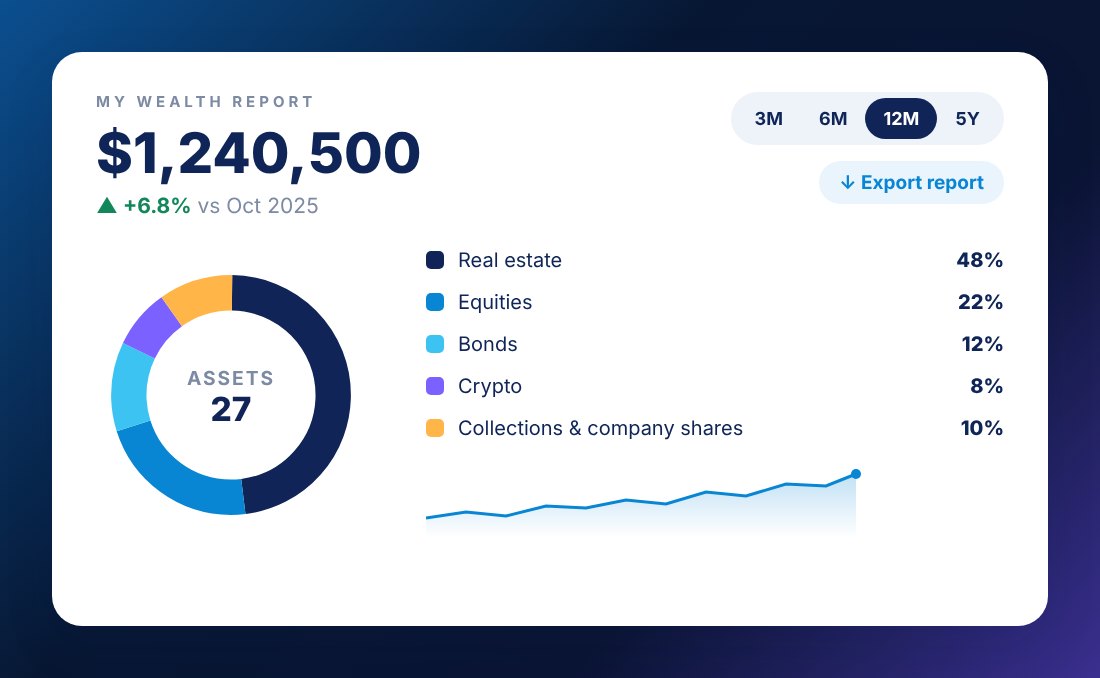
OSTREON's asset portal works like a spreadsheet — edit values right in the table, add custom fields, link mortgages and loans to the asset they relate to, show co-owners — and the wealth report shows exposure by category (real estate, equities, bonds, crypto, intellectual property, company ownership…) with change over the period you choose, exportable. The difference with a spreadsheet: it is encrypted on your device and knows who should receive each line.
Start your free month →Why a spreadsheet alone isn't enough: Why your wealth spreadsheet will fail your family.
Frequently asked questions
What is a personal balance sheet?
A list of everything you own and owe at a given date. The difference between total assets and total liabilities is your net worth.
How often should I update my personal balance sheet?
Quarterly if you invest actively, twice a year for most families, and after any major event such as buying property or selling a business.
How do I value assets that don’t have a market price?
Use a reasonable, documented estimate — comparable sales, a professional or insurance valuation — and record the source and date.
Can a personal balance sheet help with estate planning?
Yes. It shows what exists, what is owed and which assets lack a beneficiary, and gives heirs and professionals a clear starting point.
This article is general information, not legal, tax or financial advice. Rules differ by country and change over time — check with a qualified notary, lawyer or adviser for your situation.