Why your wealth spreadsheet will fail your family
The spreadsheet is the most popular wealth tool in the world — and one of the worst inheritance tools. A friendly argument for keeping your numbers somewhere that can actually reach the people you love.
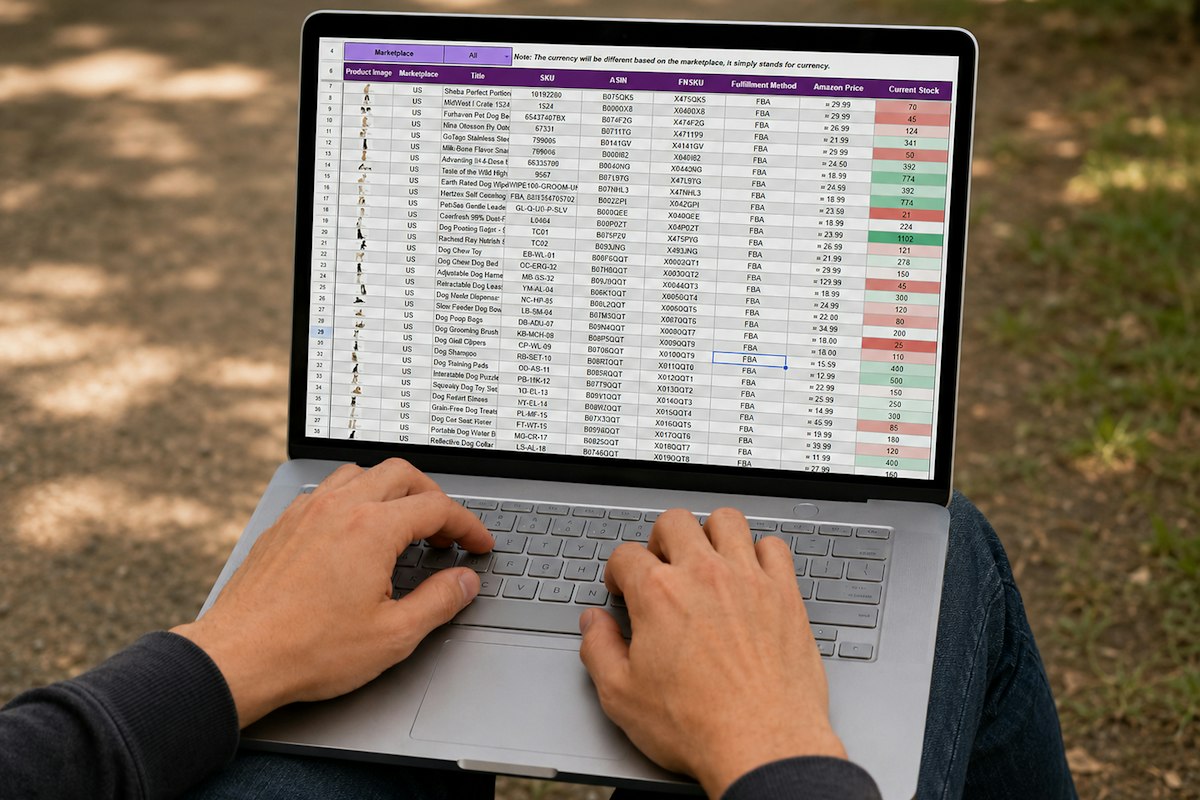
Spreadsheets are excellent for calculating and terrible for transmitting. They are usually unencrypted or protected by a password nobody else knows, they live on one device or account, they mix sensitive data without access control, they go stale, and they contain no logic about who should receive what or when. For family wealth, a spreadsheet works best as a calculator — not as the system your heirs depend on.
- A spreadsheet answers “how much?”; your family will need “where, how and who?”.
- Either it’s unprotected, or it’s protected by something your heirs don’t have.
- All-or-nothing access: you can’t give each person only their part.
- The best spreadsheet is the one that dies with your laptop.
Confession: at OSTREON we love spreadsheets. We built our asset portal to feel like one. But we've also seen what happens when a spreadsheet is the only record of a family's wealth — and it is rarely pretty.
Five ways the spreadsheet fails
1. It's either open to everyone or locked to everyone
Unprotected, it's a map of your wealth sitting in a cloud folder or an email attachment. Protected, it's a file your heirs can't open. There is no middle ground.
2. It lives where you live
On your laptop, in your personal cloud account, behind your two-factor. When you can't log in, nobody can.
3. It's all or nothing
Your daughter should see the flat she'll receive, your business partner the company file, your brother the instructions for the boat. A spreadsheet shows everyone everything — or no one anything.
4. It has no idea what “the time has come” means
A file can't notice you've stopped responding, remind you, wait, and then hand each person their part. It just sits there.
5. It goes stale silently
The tab called “2023 update” is the one your heirs will find. Values, accounts and contacts drift; nothing tells you.
Spreadsheets are calculators. Families need custodians.
What to keep from the spreadsheet
- The habit of listing everything in one place.
- Linking debts to assets and tracking value over time (Build your personal balance sheet in one afternoon).
- Custom columns for what matters to you.
- Editing fast, in the table.
What to add
- Encryption on your device, with a key only you hold.
- Per-asset beneficiaries and priorities.
- A keep-alive mechanism that releases the right lines to the right people.
- Documents attached to each line, not lost in a folder.
Everything you like about spreadsheets — plus the part that matters
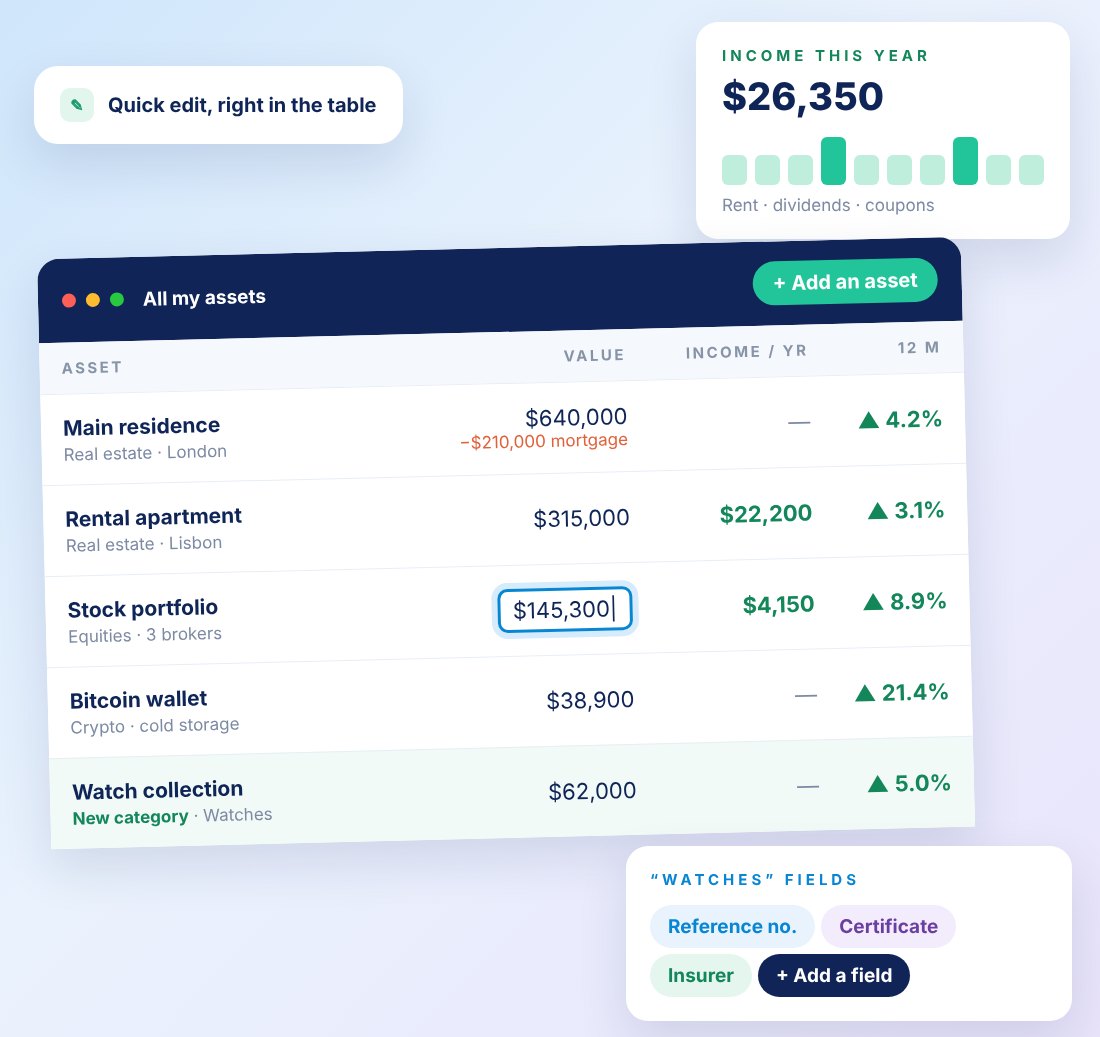
OSTREON's asset portal lets you edit right in the table, add fields from our list or create your own, build filters, link loans and co-owners, and follow value history — with a wealth report you can export. Unlike a spreadsheet, it is encrypted on your device, every line knows its beneficiaries, and it releases only what each person should receive, only when the time comes.
Start your free month →Frequently asked questions
Is a spreadsheet a good way to track family wealth?
It is a good calculator, but a poor transmission tool: it is either unprotected or locked to others, can’t give each person only their part, and doesn’t know when to release information.
How should I store my net-worth spreadsheet securely?
If you keep one, encrypt it and don’t email it. Better, use a tool with client-side encryption and beneficiary-specific release, such as OSTREON.
What happens to my spreadsheet when I die?
It stays on your device or account. Unless your family can access them and knows the file exists, it may never be found.
Can OSTREON replace my wealth spreadsheet?
Yes for most uses: it offers spreadsheet-style editing, custom fields, debt linking, value history and exportable reports, with encryption and inheritance built in.
This article is general information, not legal, tax or financial advice. Rules differ by country and change over time — check with a qualified notary, lawyer or adviser for your situation.